We are living through a silent crisis: the slow extinction of our own microbiome. But what if we could stop it?
Welcome to the Microbiome Maverick Podcast, where cutting-edge science becomes your real-world toolkit. I'm your host, Dr. Amine Zorgani, and I'm on a mission to save our microbiome from extinction. Each episode, we'll explore the science and strategies you need to protect and nurture your inner ecosystem.
Enjoy the episode, and please follow and share! Happy to hear your thoughts and stay positive!
You can find more about The Microbiome Mavericks here: www.microbiomemavericks.com
If you are interested in speaking, partnering, or sponsoring the show, you can reach out directly to dr.amine@microbiomemavericks.com
[00:00:00] We are living through a silent crisis, the slow extension of our own microbiome, but what if we could stop it? Welcome to the Microbiome Mavericks Podcast, where cutting edge science becomes your real-world toolkit. I am your host Dr. Amine Zorgani and I am on a mission to save our microbiome from extension. Each episode will explore the science and strategies
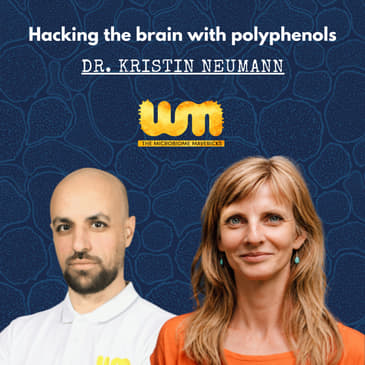
[00:00:27] you need to protect and nurture your inner ecosystem, your microbiome. Enjoy the episode and please follow and share. Happy to hear your thoughts and stay positive. Good morning and welcome to the Microbiome Mavericks. Today I have with me Christian Newman, the founder of My Microbiome, a company that actually has established a standard which I've come to know back in 2017 when one of
[00:00:56] my friends and colleagues came to me like Amine, listen, have you seen this seal on products called Microbiome Friendly? I said no, I haven't and that's when I first met with the brand of My Microbiome, the Microbiome Friendly seal and I'm very happy to have with me Christine today. So welcome Christine to the Microbiome Mavericks. Thank you Amine, very happy to be here and talk to you. My pleasure. Let's
[00:01:22] maybe start Christine with your background and I think also interesting to know how do you end up in the microbiome? So yeah, so I'm a microbiologist by learning. I studied microbiology in Germany and did my PhD on Carinobacterium glutamicum and the nitrogen regulation but then I was very interested in going into the industry very quickly in order to like have an impact on the society and was very lucky
[00:01:52] to be employed by a company called Lysendo in Regensburg, Germany that would develop new antimicrobial enzymes based on endolysines which would work selectively and is a pioneering technology which would be able to replace antibiotics. And so I was working there and doing a lot of
[00:02:13] testing back and forward with developing new proteins and enzymes and testing them on different microbes and actually that work we do in that in that work we developed a wound spray and we applied it to like wounds that were kind of how you do you say like there was no other option to work on like like to
[00:02:40] treat them anymore so we were able to treat them with that spray and these were decubitus wounds or alters that wouldn't heal for months or even years and we applied that spray which would selectively kill the pathogenic microbes and it was like a miracle you could really see that wound healing you could almost kind of watch while it was healing and it's that is kind of how we were I mean we were in
[00:03:06] touch with the microbiome before because we knew in contrast to antibiotics those enzymes would like spare the microbiome when erasing those pathogenic invaders and but this was the moment kind of when we were like okay this is really important and the microbiome has such a huge role and you can see that in the literature now that wound healing also requests an intact microbiome so it's not really
[00:03:31] um working to disinfect the whole wound and to make it heal unless you're a healthy person and have a small wound of course it works then but um so and that is how we thought about we must make this topic more um visible to the public and we created and designed this website about the microbiome so we never had this idea of making a seal um that came later but we have we wanted to make this very important topic
[00:03:58] available for the broad public and this is how we started amazing and i think you and me as we know when people speak about microbiome they immediately think about the gut microbiome but today we know that there in just the gut microbiome there are other microbiomes and among us there is this skin microbiome why do you think there is probably lack of awareness or maybe is it like a higher awareness
[00:04:27] today than it was yesterday about the skin microbiome and how people are seeing this as a shield or what is it like this skin microbiome yeah as you're right so the people they are knowing about the gut microbiome there's several books out there everyone knows about probiotics and things like that to like kind of nourish the gut microbiome and about the skin microbiome it's coming but it's still there's a lot of people out
[00:04:51] there that are not aware of the skin being um colonized by microbes and they're kind of still finding it a little bit awkward to be like colonized outside and um i think they're fine with the gut being colonized but the skin is still strange for them and but one thing that i see in the cosmetics industry
[00:05:14] evolving is that uh skin health as such in general is becoming more popular so the customers understand that a healthy skin means it's a beautiful skin and the microbiome is a part of it and this is how i think the understanding comes in that also the microbiome is important to care about when we want to uh get a healthy skin in the gut as well i think there are also um although there is as you said
[00:05:42] an increased um awareness about it uh and there are there are some reports that are actually showing that this increased awareness is really noticeable where i think between 2023 and 2024 we've gained like 13 percent on more of how much people are aware um on the gut microbiome and probably skin and others uh but in the other side you still have also um medical community pushing against uh you have in
[00:06:09] the gut microbiome and the gi doctors for instance to some extent some of them actually do say i don't believe in this that uh anyway it would work or even bring any benefit it's just another thing that's in in you do you see similar trends um in the the skin dermatology field i mean are these doctors also pushing back against it yeah so i like i my my sister my brother no my brother-in-law he's a
[00:06:35] dermatologist and he's like every time i try to talk about this with him also with the wound spray we had earlier he's like yeah it's just another thing it's probably not working because he's used to things not working yeah and um he's also like they are very stuck in their traditional medicine that's what they learned and they have their routine and i think it's hard for them because they're very in germany at least
[00:07:00] they're very stressed they don't have time um to try out other things and to go really for that holistic approach when when um looking at an issue then it's too much for them i guess and it's it's a pity like really yeah it is and also with prescription of antibiotics not only dermatologists but like all doctors they're really fast with it and sometimes they don't even distinguish viruses from bacteria
[00:07:26] and it's like you have a flu okay take antibiotics yeah unfortunately yeah i think that's that remains also valid for um for all other fields they're actually anyway using antibiotics uh for reasons that probably sometimes wrong although antibiotics must be used when they're required when you have an infection you don't have unfortunately another solution but there are other things that you may be able
[00:07:50] to use to mitigate but antibiotics is um is a killer uh for microbes uh but there are other things that are also killers for microbes and that's what we gave or we came into this concept of microbiome friendly so would you explain to us what doesn't mean a product that is a microbiome friendly i know antibodies aren't microbiome friendly but what are the other things that could be a microbiome friendly or how do we define them in that sense so yeah the idea or our idea of microbiome friendly is that
[00:08:18] products no matter where they are applied they are not having any influence on the existing microbiome and for that it's actually you have to think about products that they can have an effect on the microbiome um so if you look at cosmetics for example they can contain a lot of antimicrobial ingredients not only preservatives or surfactants but also all essential oils depending on
[00:08:45] which one they can be more or less antibacterial and also the trend for natural products of course we have very toxic and very antibacterial plants out there so we must be cautious with every ingredient that is being used and um everything we apply on the skin can have an effect on the microbiome and our goal is that um products so ideally so of course i'm always saying you don't apply anything like
[00:09:12] you let your nature thrive of course you need sunscreen things like that but if you need a product or want to use it then at least it should be microbiome friendly because it should not change your microbiota as they are and in a healthy state of course and yeah the way we do it actually is uh the way one can test it of course we have a lot of discussions about in vitro methods in vivo methods
[00:09:38] and um every method has its pros and cons of course and um but if you really want to see that a product is having no effect at all it is actually you can kind of break it down to the tests that we do in the laboratory in vitro because this is the most sensitive method you can have because you directly see the interaction of the product on the microbes and if the product has any activity you will see it there
[00:10:04] and this test is a very safe test because if you don't see any interaction there then you can be sure it's very safe on the skin and of course the downside of it is you cannot depict like the whole diversity of everyone's microbiome but what we can do so far with what we know so far from the literature and from the research that's out there is that with the we can select a bunch of microbes like a set
[00:10:30] of microbes that we always use in our standards that are reflecting 90 percent of the microbes of a specific skin area and with that we are actually happy so because usually the products or the ingredients are not selectively killing we can we see some selectivity for anaerobic microbes versus aerobic microbes or for um yeast some are only killing the yeast or some are only killing the bacteria
[00:10:58] bacteria and since we are including all of those different type of microbes we can have a really good picture in the end and um our our window of allowing like interaction or influence is very small like we only allow up to 30 reduction and we also have an upper window of 60 so it's also not good that certain microbes even if they are supposed to be good are overgrowing the others because that is also
[00:11:26] creating an imbalance so yeah and then in the end if the product doesn't have any effect then we can give those products a certificate and a certificate like a seal that they can carry and show to the customer that this product doesn't have any effect on their microbiome at least absolutely and i think i think again the notion of microbiome friendly might differ from um from one person to another and how they see that right because of the different views on the science as you said whatever the methods that
[00:11:56] um that company is using is in vitro or ex vivo or in vivo and so on and so forth but i've always asked this question and i haven't yet found um an answer to it microbiome friendly uh now is more towards skin care products uh would you envisage that same approach could be also used for other microbiomes like guts is it like is it easy to do well we are doing this at the moment we are almost done with
[00:12:25] establishing a standard for the gut actually because we have clients asking for that and also here of course it's complicated so but we are here for that we are also taking the most abundant strains of the gut um and we are working strictly anaerobically so we have an anaerobic working bench because we know that if they like some microbes if they want to see um oxygen even though they would survive they behave
[00:12:53] different so it's important to to be in that anaerobic environment and then do the testing but again it's very simplified and we need to be or we must make sure also for the customers in the end that they really stick to that claim that it's microbiome friendly because a lot of customers want more they want to have a like rebalancing nurturing improving microbiome claim and this is something that is
[00:13:20] really really complicated for skin and for the gut even more because very you you want or you need to show the function that the actual microbiome um is doing something because if you put your product in so which is not easy to do uh because in and the complexity of the microbiome and the highest diversity of the gut microbiome essentially so i think as you said sticking to saying okay this this uh formulation
[00:13:47] or this product isn't harming to an extent to whatever the science uh sorry the methods are being used on that specific context because if you change the context you change the outcome which basically can be also um you know drifting away from the actual test itself so and and i'm really happy actually to to hear that so that you're already looking into the gut and i hope you look into other microbiomes in the future as well
[00:14:15] which is great news and uh a i i'm looking forward to see the the test on the market because that's something i was always wondering about okay um is anyone going to do it at some point so cool that you're working on it and uh yeah i wish you all the best my question is uh when the consumer now is see this microbiome friendly seals on products uh they may be tempted to go to these products
[00:14:40] and um as opposed to products that don't have a microbiome seal a friendly seal why is it important for them what would they be expecting if they see a microbiome friendly seal so scientifically we've seen when said how you do it and how do you test it but me as a consumer if i see a microbiome friendly seal what does that mean to me what should i expect from that product just to be clear on the topic yeah so it makes a difference
[00:15:07] if you have like of course it depends on also which seal you're looking at if it's ours um the customer is able to look it up online and look at all the like the methods and the the results and see what's really going on and um then of course some companies have their own seals created and for i think for the customer it's
[00:15:30] really uh difficult to distinguish which one is a real one and which one is um not real or um but the most the safest side is always for the customer to go on the website of the of the customer of the brand and look if there's any data or are they just saying it's microbiome friendly because of certain ingredients they're using or not using and if they are depicting a seal but you cannot see
[00:15:57] anything behind that like you don't find any data then i wouldn't i myself personally wouldn't trust it so but if someone's if some brand is saying they're microbiome friendly without a seal for example and they show data on their website then you can look at the data and if they look good and you can trust it so it's really about the data and about the transparency they're showing and i think that you touch upon on something very very important really you said if the consumer sees something on
[00:16:25] the on the microbiome friendly with or without a seal they can go to the website and see the data and uh you are doing a good work on your outreach of scientific education you have a newsletter as well that you're also reaching out to to consumer and and also companies educating them about the microbiome field not just skin you're going beyond that but as you know um we as scientists we do look at the data we understand them from probably the first 30 seconds maybe because okay i've seen
[00:16:54] that several times so it's fine with me but the consumer you know most of the consumers not most sorry maybe i don't want to underestimate the intelligence of my listeners but some some part of consumers may not have that skill of microbiome um or microbiology or even or a scientist skills so how should we expect them to understand how the data looks i mean when they see a graph what does
[00:17:19] that mean to them so what are the ways or what do you think should be done to enable the consumer differentiating from what is a generally microbiome friendly product and those who are just market claims really yeah yeah it's it's not easy so the um most important part of course of our work is education and i think that's yeah so we have to do that more and more and more and we're working on
[00:17:47] this and also with you and but i mean from my perspective i can say if one if a customer sees our seal then they can be safe like they can trust it and if it's other seals i cannot speak for it but they have to really go into deep and to look into data and i mean if they they understand a little bit they can they can see what's going on i mean you just have to compare to antibacterials and how
[00:18:11] how they are rated kind of or what what means antibacterial and then if you look if you find data and you look at them just make your own picture and see if those data are good or not good but it's already good to find data yeah it's already good to find data indeed i think um i think again as you said that we still have um some level of work that we really need to put together to um facilitate the
[00:18:38] education of these consumers uh because a consumer they're looking for a microbiome friendly product they're already health conscious they already know the importance of that skin microbiome that they're um they're having and i think it's very important for us to facilitate to them okay you're already interested we'll give you a tool or the means or the science that enables you to easily understand this without you being lost in and many of um let's say um scientific papers that's you know
[00:19:07] sometimes in us we don't understand them too much too much microbiome exactly so uh in that sense but as you as you mentioned so you already have a certification that you're putting on for um the skin microbiome you're working on the one on the gut uh so what are some of the challenges uh that can be put when you're actually doing this process of creating these protocols that you're doing as
[00:19:34] you know um as for any other test that out there in the market you always have some criticisms okay your method has this xyz of maybe not looking at it and so on so what are the challenges and how do you address those challenges to put something that is good enough to really say okay this is a product we certify there is a microbiome plenty for skin or for that yeah so i mean of course we have those as
[00:20:00] i said those discussions going on and specifically the cosmetics industry is very used to perform in view testing it comes for hydration or wrinkles pores whatever they're measuring it of course on volunteers and they must understand that the microbiome is completely different it's more like a clinical setting that you would have to look at and because it's way more complicated than just measuring wrinkles
[00:20:24] kind of so that's but when we every time we under explain the method we use and why and we use it and what is the outcome and what is the claim behind it they understand and it's completely logic to them but first we have to overcome that um questioning but and the other thing of course is when you when we develop something new for example we just um launched a seal for dogs dog care
[00:20:51] and we were going into literature and uh we found that there's actually nothing like uh there was no strain specific uh information about the pet or dog microbiome and that's how we started actually investigating ourselves so we swapped over 30 dogs and at different body sites and uh we made actually
[00:21:16] multi-tough analysis because we wanted to see like which really what is really living there besides sequencing as well but we wanted to really know the the live organisms which you don't find when you really do sequencing and yeah with those so we found the most abundant strains for all those dogs and then created this certification then we went to the lab and cultivated those strains and and set up the
[00:21:41] testing like as it is and for the gut of course it's even more complicated or tricky because it takes a lot of time the the microbes um are growing very slow in anaerobic conditions and if something doesn't work you only find out like two weeks two weeks after the experiment and then you have to go back and try it again but i mean yeah we're scientists and we love doing what we're doing so it's fun but um
[00:22:07] yeah it's also challenging of course because um as we all know that uh knowledge around the microbiome is still very very little and we have to work with what we have and of course we're following everything that's happening out there and we also give our opinion and what could be could be done better but of course it's it's it takes time to to improve the science improve the methods and then in the end
[00:22:32] ultimately get great um data that we can work with but yeah we are always adopting our our technologies our standards to be on the current knowledge that we have fantastic and i think one of the also things that you do is as we said earlier is uh this um education and scientific outreach and one of them
[00:22:55] uh let's say a very interesting topic that is um let's say uh the topic of the year uh because there are many papers that are actually published on it um is this direct to consumer microbiome testing right it's different than this microbiome friendly it's because you're testing to assess whether a product is microbiome friendly to skin or to the gut but the direct to consumer microbiome testing is testing
[00:23:17] someone's microbiome here mostly guts although there are some other tests in the skin but some data are showing some how to say very interesting uh results let's call them like that um in your opinion what are the biases and limitations um inherent into these microbiome tests and i know that you've done a study on it so i think it would be interesting to to have your opinion on that yeah so back in 2020
[00:23:44] we performed our first study and uh in that study we have select like we have collected really the the fecal samples of one person at one time point and send it out to different um um different into different labs that are uh supplying those kits and first of all we got different results although it's been the same sample at the same time like not different days or so and based
[00:24:12] on those results of course you get different recommendations what to eat and how to change your diet and also on top of that like the person we were analyzing he has a really bad like he had a bad gut like he has everything you can have like he's on your very strict diets already and um very sensitive to everything if he eats something wrong or he cannot drink alcohol or whatever so he and some recommendations
[00:24:40] already kind of recommended what he's already doing and then others the opposite and then um nothing really helped him like to change something to make it better but so the biases of course of those tests is and what the majority is talking about when doing those analysis is talking about the gut microbiome when you actually take a sample of the fecal matter which is the the colon like the end colon and not
[00:25:09] like the upper like the small intestines and i think yeah of course it's difficult to analyze the small intestines but it it's actually the most important more important part because it's stronger interacting or the strongest interacting with our immune system but it's lower the colonization is lower as in the in the end cut and then during these analysis um it's usually 16s rna sequencing
[00:25:38] which is first of all only looking at bacteria you don't look at all the fungi and viruses you don't also don't find and it's looking at dna so if you actually sequence everything you find there is it if it's dead or not like they don't distinguish between life and dead cells so they can like have lurked for there for like the last like two weeks or so and then in the end you find them the dead dna in that
[00:26:05] sample um and i think the the researchers are aware of this and we have to be like looking at the microbiome but the gut microbiome also in a more functional way and i think it's going there and it's looking really good but so far those methods are more expensive of course and for a customer like customer kit testing kit it would be too expensive to really have a closer look a deeper look and then in the end of
[00:26:35] course the customer does have the expectation to uh to get something out of it to improve health via via the food they eat but i think this is really um dangerous because they they they will follow that diet then on based on data that are maybe not the best so i think a gut test does gut test can have
[00:27:03] a gut test is a good question i think it makes some sense if you are under under uh treatment and um your doctor is looking at you at in a holistic approach and looking at your blood and like everything around but only relying on a gut test i don't think it makes sense but also i think um what you said here is definitely um very interesting because um that's what you're seeing here that the gut microbiome is a
[00:27:27] component of you know a bigger equation so microbes are not just isolated from us the host they're connected with our immune system with um the all the rest of whatever organs are there but when a consumer uh let's say educated or non-educated on the microbiome topic um they found this topic uh okay these scientists are telling me that this microbiome is actually doing everything in and connected to
[00:27:57] even some non-commonicable diseases became communicable because of the microbiome so i want to test that i really want to test that and see whether that can improve my situation this usually happens for people or uh patients that have tried almost everything conventional uh medications and drugs and all that but it didn't work out for them so they're trying to find something else and they usually in most cases or if not all the cases land on the microbiome they go in without sometimes
[00:28:28] looking behind and doing this microbiome test and then end up by being disappointed because you know they get the report and they might be able to use it because there are a bunch of bacteria there as you said uh doesn't really mean anything to some cases uh okay what should i do with a list of microbes in my gut okay what else but how can we avoid we know that the science of microbiome is emerging
[00:28:51] and is uh not emerging sorry it's here since a lot of years now but it's improving year and year but what can we do to bridge between the lack of awareness okay and maybe the eagerness to bring something to market from these companies they're wanting to use the opportunity to actually do something about it but maybe the science is not completely there maybe there are some pieces missing but the consumer
[00:29:19] is demanding it so you say okay the demand is here uh and yeah maybe you could put the offer so what's the i don't know how to ask it but what's the the bridge between these two universes i would say i mean i think we we need and i think that that has been said a lot of times already we need an international standard of methods that everyone is using then and also i didn't mention uh earlier the databases that
[00:29:44] are being used so of course you you find sequences that are uh like uh some letters you have so if you don't have uh that microbe or that sequence in your database you won't find it it's not gonna be uh popping up so we need great the good databases and of course the the the kids they they're referring to different databases depending on where they are located in the world and yeah we need standards for
[00:30:13] the sampling for the method of analysis so everyone would follow the same sampling of course it's different difficult as a company because you want to stand out from the others but that would help the whole like situation and then also mentioned what is the what is the um
[00:30:38] the like the up to downside what what can't i say with that test and what can i say so i mean there's some some outcomes that make sense and then you can that you can look at if you know the functions of the microbes and then but yeah of course but the methods have to improve absolutely first of all you guys standard and then we need improved methods to have a big better data set to that is really meaningful absolutely and you said something very important that is like transparent being transparent
[00:31:07] and saying okay this is what we can tell this is what we cannot say uh it's not clinical uh diagnostics test it's rather as uh some may call it wellness test at the moment because okay we're just showing you what's there and potentially what you could be doing about it without connecting to blood tests and others christine um the time has elapsed so quickly and it was a very uh nice conversation to finally have it with you i think we've been planning this for a long time now and um i'm more than happy
[00:31:37] to have you final five very quick questions uh if you may uh that i asked to all the microbiome of the genetics guests number one why do you do what you do yeah because i love like i love bacteria but i also like like as i said in the beginning i want to make an impact i want to make my little contribution to make it a better world um yeah that's actually it excellent one productivity tip
[00:32:08] for productivity tip for yes like a productivity tip i mean you're a busy woman and uh so we would love to know how you get through the day and being productive sleeping i'm sleeping a lot good so i go to bed with my kids in the evening like it's amazing eight or nine and then i sleep through the night and that helps
[00:32:30] me like stay through the whole day working having kids you know prepare meals and everything yeah that's i think that's the secret honestly i think that's the best productivity tip i ever heard since i started this probably uh now 37 interviews or more is the best one because uh 100 sleep actually makes you productive the day after and keeps you energetic and i wish i could do that with my daughters who are
[00:33:00] electric oh my god putting them at bed at eight never happens never you don't have school starting at eight in the morning so we have to go to bed that early in germany you know it's crazy yeah absolutely do you have one book that you liked or shared with someone oh the one i really loved and i haven't found the time in the last years to read books but when i was younger i read a lot the the medic their
[00:33:27] medicals it's in german their medicals like it's really about fundamental uh medicine and how it all evolved and i really like that one excellent can you tell us about someone who inspires you my daughters actually excellent i'm i'm learning from them every day like i'm to be the best myself amazing if you would help to change something in this world what would that be
[00:33:58] well i would like to bring all the all the global leaders together on one table and like help them find a solution to have a better world because it's a mess like i couldn't agree more uh christine thank you so much for being with us on the microbiome maverick was a definite pleasure to have you thank you you